Mood
Viewers explicitly choose how they feel. The product does not infer emotion from private signals.
01Individual UX project
A movie-discovery concept that uses mood, viewing context, and available time to make recommendations easier to choose and understand.
The problem
Most streaming recommendations rely heavily on viewing history. That can be useful, but it misses immediate needs such as how someone feels, who they are watching with, and how much time they have.
When viewers cannot tell why a title was suggested, they have little information to compare options or correct a poor recommendation. CineGuide reframes discovery as a short, transparent conversation instead of an endless scroll.
The response
Viewers explicitly choose how they feel. The product does not infer emotion from private signals.
Watching alone, with a partner, or with family changes what a suitable recommendation looks like.
Runtime becomes a practical filter, so every result can realistically fit the current session.
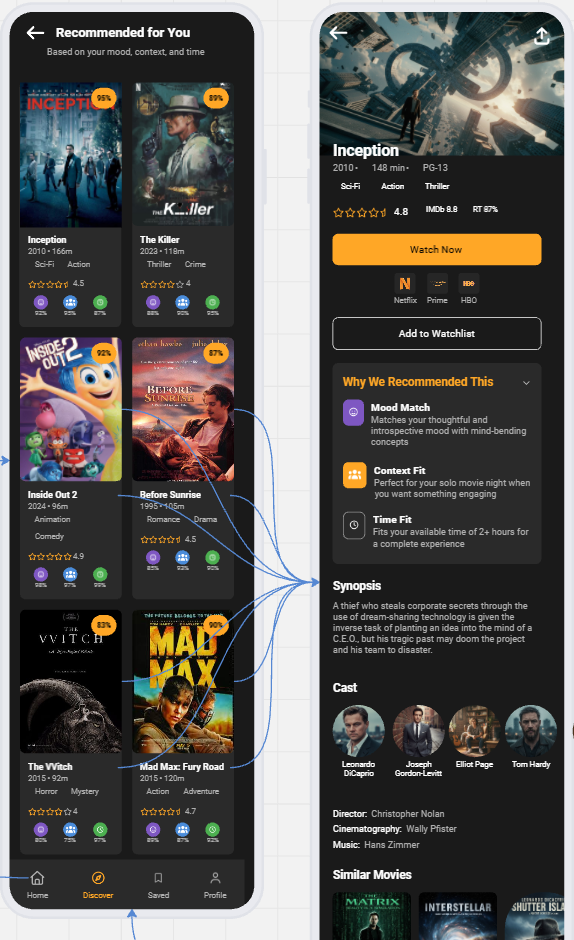
Mood Match, Context Fit, and Time Fit explain why each movie appears and what the viewer can change.
Prototype evidence
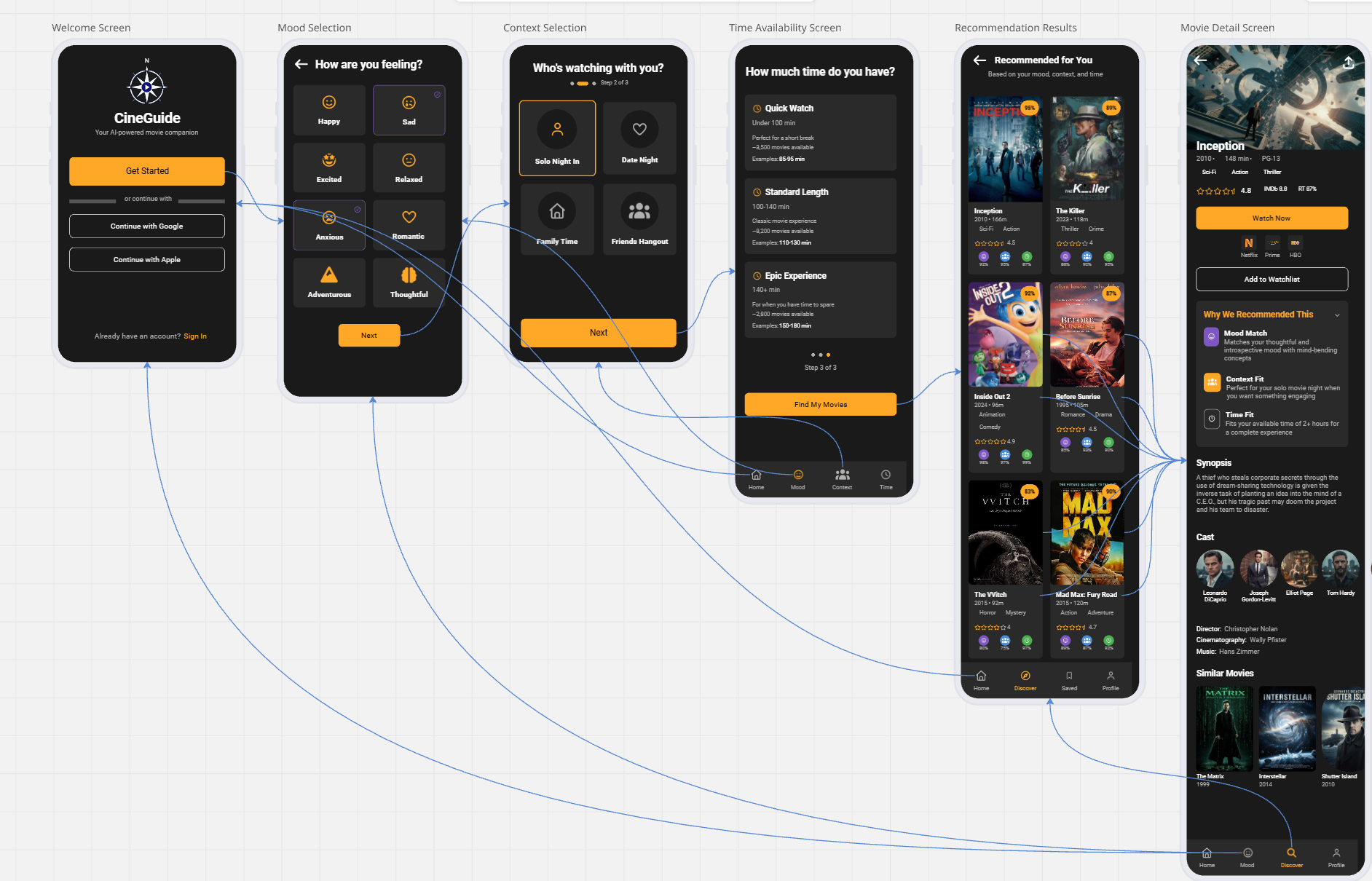
Each gallery label explains what the artifact shows and why that decision matters. Use the thumbnails or arrow controls to move through the flow.
Six connected screens move from onboarding through mood, context, time, recommendations, and detailed rationale.
What I delivered
Control: People can change any input, reset preferences, and use lightweight feedback such as “More like this” or “Not today.”
Transparency: A “Why this?” view ties each recommendation to visible contributing factors rather than asking viewers to trust a black box.
Privacy: Mood is treated as session-based data, and longer-term personalization remains optional.